Ownership, access, uses, constraints and local compatibility.
Ground-mounted solar plants
Transform land into a technically defensible project.
A ground-mounted solar plant is designed around land ownership, planning rules, environmental constraints, access and available grid capacity.
Regulatory information verified on June 24, 2026.
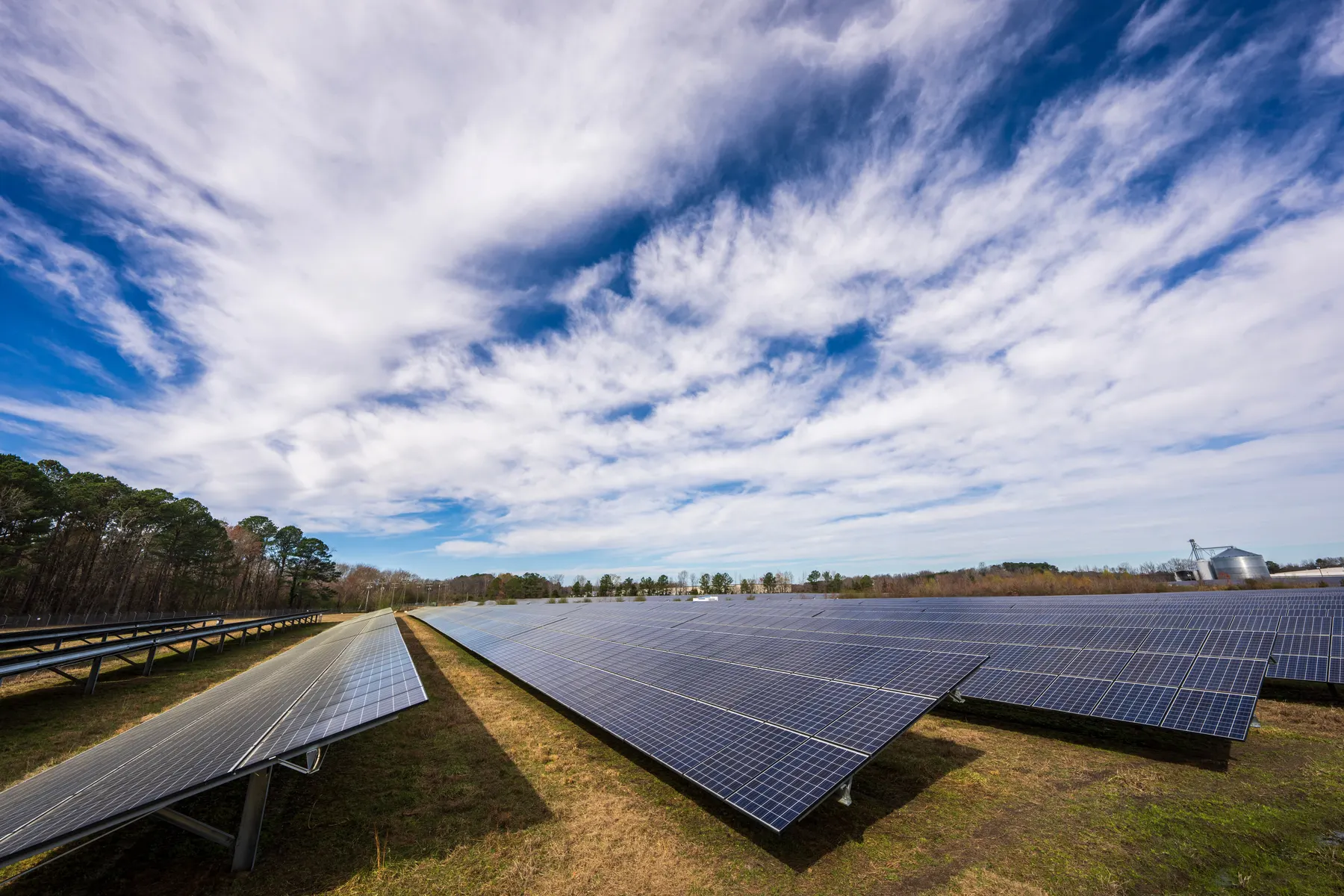
AYM ENERGIE study
What we check before recommending a solution.
Installable capacity is never the only criterion. The site, its use, the grid, local constraints and project economics must remain consistent.
Land compatibility
Plots, easements, access, neighborhood, existing uses and actual availability of land.
Relief and implantation
Topography, slope, orientation, spacing, earthworks and equipment footprint.
Environment
Zoning, biodiversity, landscape, water, risks, heritage and possible additional studies.
Grid connection
Delivery point, distance to the grid, voltage level, substation and potential costs.
Operation
Internal roads, fences, security, maintenance, vegetation management and reversibility.
Project economics
Power, energy yield, losses, CAPEX, connection, operation and valuation scenarios.
Regulations & procedures
Rules to know before submitting the project.
Most ground installations require planning permission. The type of authorization depends in particular on the power, height and location in a protected area.
This information is general. The PLU, the protected sectors, the network manager and the characteristics of the site may modify the applicable procedures.
- Less than 3 kWp and height ≤ 1.80 mIn general, the installation can be exempted from formalities, outside protected areas.
- Less than 3 kWp and height > 1.80 mA prior declaration of works is required in general.
- From 3 kWp to less than 3,000 kWpA prior declaration of works is required in general.
- From 3,000 kWpA building permit is generally required.
- Protected sectorsThe thresholds are stricter: a prior declaration may be necessary below 3 kWp and a building permit from 3 kWp.
- Additional proceduresDepending on the site, environmental, agricultural, landscape or connection studies may be added to the urban planning authorization.
Recommended route
Transform an idea into a documented decision.
Qualify the land
Identify ownership, access, PLU and main constraints.
Pre-size
Define a preliminary footprint, capacity and technical assumptions.
Assess the risks
Examine environment, connections, easements, topography and acceptability.
Consolidate the file
Produce the layout, production, economy and technical parts.
Decide to continue
Arbitrate based on residual risks, schedule and project value.
Sources & original texts
Consult the official sources directly.
The links below open the official pages used to summarize the rules of this typology.
service-public.fr
Planning permission for ground-mounted panels and solar carports
Prior declaration thresholds, building permits and rules for protected sectors.
Consult the official source ↗ legifrance.gouv.frDecree of December 26, 2022
Evolution of town planning formalities applicable to ground-mounted solar installations.
Consult the official source ↗ enedis.frConnect a production installation
Presentation of connection steps and injection options.
Consult the official source ↗Regulatory content verified on June 24, 2026. Local rules, thresholds, deadlines and versions in force must be confirmed for each project.
Frequently asked questions
The first answers to frame the project.
No. The urban planning threshold does not replace other procedures which may apply depending on the land, the environment, the heritage or the nature of the project.
Yes for an initial feasibility, but the connection strategy must be studied early because it can significantly modify the power and the economy.
AYM ENERGIE frames needs and integrates their conclusions. Specialized ecological, geotechnical or hydraulic expertise can be entrusted to partner offices.
Do you have land to qualify?
Address, cadastral map, surface area and access information allow you to launch the pre-diagnosis.