Sloped or flat roofs and annexed buildings.
Homes & homeowners
Produce at home without oversizing the project.
AYM ENERGIE analyzes the roof, consumption and self-consumption scenarios in order to help individuals compare solutions before signing a quote.
Regulatory information verified on June 24, 2026.
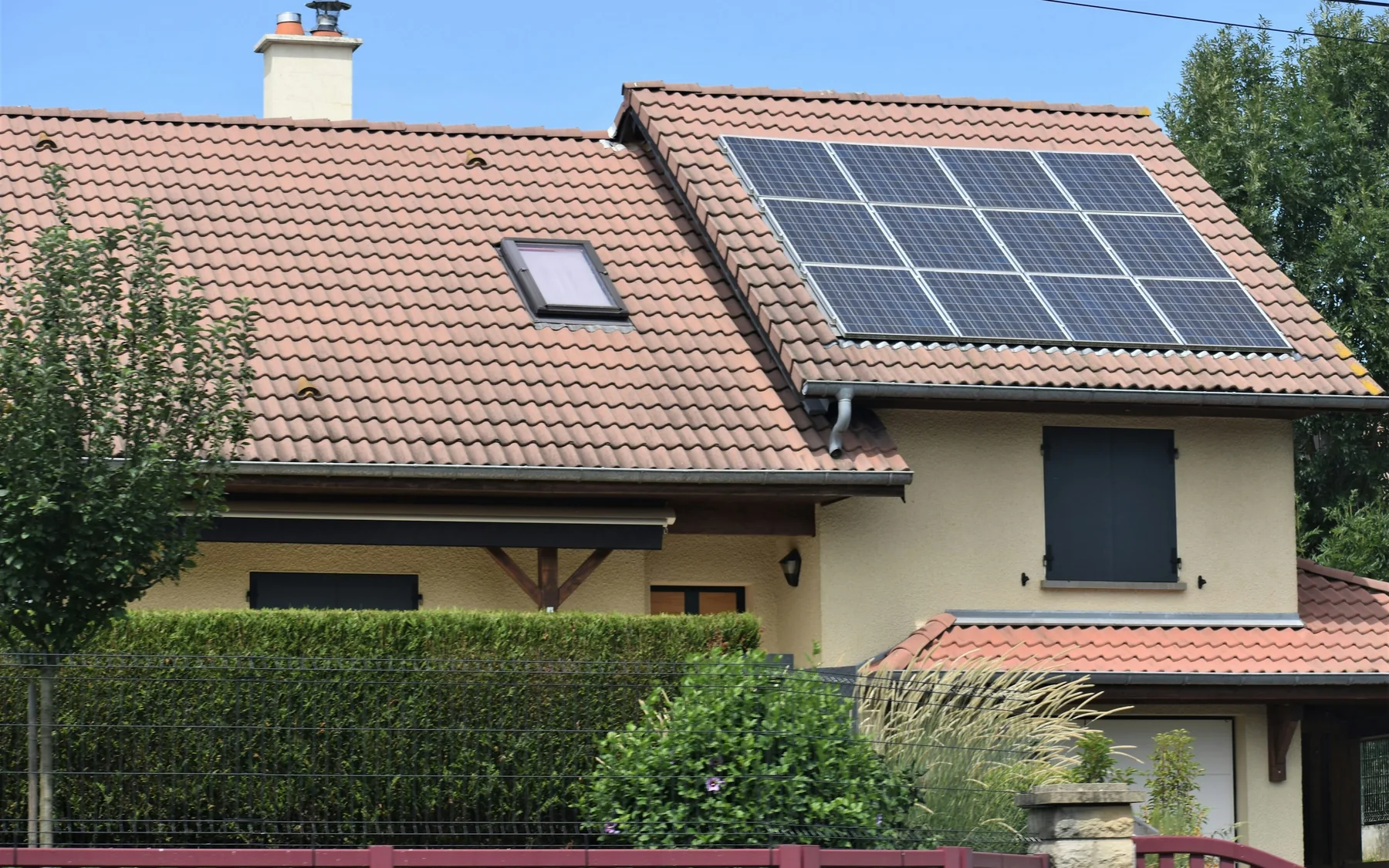
AYM ENERGIE study
What we check before recommending a solution.
Installable capacity is never the only criterion. The site, its use, the grid, local constraints and project economics must remain consistent.
Roof and useful area
Orientation, slope, shading, obstacles, apparent state of the cover and actually exploitable surface.
Consumption profile
Distribution of uses, annual consumption, periods of presence and potential for self-consumption.
Reasonable sizing
Comparison of powers to avoid an installation that is too large, too small or poorly suited to needs.
Connection and electrical panel
Location of the meter, distance from the equipment, injection option and commissioning constraints.
Project economics
Expected production, possible savings, sale of surplus, costs and sensitivity to assumptions.
Documents and procedures
Preparation of data useful for town planning, connection and exchanges with the installer.
Regulations & procedures
Rules to know before submitting the project.
For an existing house, changing the exterior appearance generally requires a prior declaration. Connection and commissioning then depend on the recovery method chosen.
This information is general. The PLU, the protected sectors, the network manager and the characteristics of the site may modify the applicable procedures.
- Urban planningOn an existing house, a prior declaration of work must be submitted to the town hall. For a new house, the panels must appear in the building permit application.
- Local rulesThe PLU, the surroundings of historic monuments and local aesthetic requirements may impose additional constraints.
- ConnectionThe project must be declared to the network manager. Enedis distinguishes between total self-consumption, surplus injection and total injection.
- Electrical complianceA Consuel certificate may be necessary before commissioning, particularly when the work modifies the existing circuit or adds a battery.
- Choice of the companyUsing a qualified RGE installer is recommended and may condition access to certain support devices.
Recommended route
Transform an idea into a documented decision.
Frame the need
Collect consumption, photos, address and household objectives.
Study the roof
Evaluate the geometry, shading and the surface area that can actually be used.
Compare scenarios
Test several powers and methods of using electricity.
Prepare the procedures
Identify town planning, connection and technical parts to be transmitted.
Choose with confidence
Compare installation offers with known and documented hypotheses.
Sources & original texts
Consult the official sources directly.
The links below open the official pages used to summarize the rules of this typology.
service-public.fr
Install photovoltaic panels in a private home
Authorizations, RGE professional, costs, commissioning and general procedures.
Consult the official source ↗ enedis.frConnect a production installation
Project stages, self-consumption options and connection request.
Consult the official source ↗ enedis.frTotal self-consumption without injection
Obligation to declare a production installation even when all the energy is consumed on site.
Consult the official source ↗Regulatory content verified on June 24, 2026. Local rules, thresholds, deadlines and versions in force must be confirmed for each project.
Frequently asked questions
The first answers to frame the project.
For installation on an existing house, prior declaration is the general rule. The town hall must, however, confirm local regulations and possible property protections.
No. It must be compared to a scenario without a battery according to consumption, cost, lifespan and autonomy objectives.
No. AYM ENERGIE carries out the study and independent advice. The installation is entrusted to a construction company.
Are you considering equipping your home?
Send an annual invoice, some photos of the roof and the address of the project.